

Modern DBT Diary Cards
No more check-in friction for your patients. No more lost or scattered insights.
The Problem
Say goodbye to your old diary card system. Say hello to precision DBT.
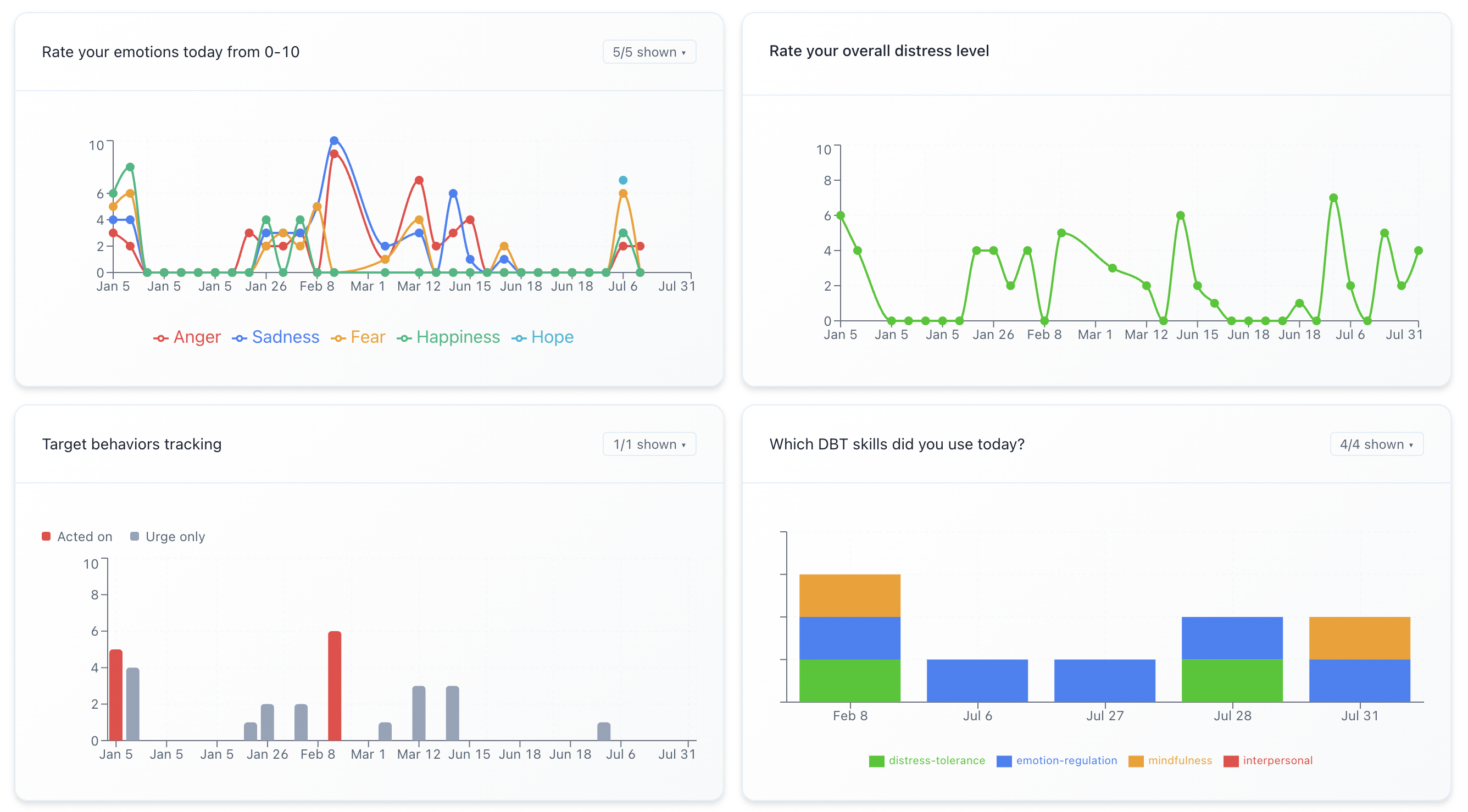
Traditional DBT diary cards often fail in practice. Paper cards are completed inconsistently and do not support longitudinal analysis, while app-based alternatives rely on sustained engagement that many patients struggle to maintain. As a result, critical insights are lost and DBT therapy becomes more responsive than preventive.
Inconsistent completion. No longitudinal view. Data reconstructed from memory at the session's start.
Requires downloading, logging in, and sustained engagement most patients don't maintain.
One phone number, zero app. Every check-in flows automatically into a structured, chartable diary card.

How Dbrief works
Four steps from setup to
session-ready data
Each diary card is built around the patient's plan of care — check-ins, chasing, and charting happen automatically from there.
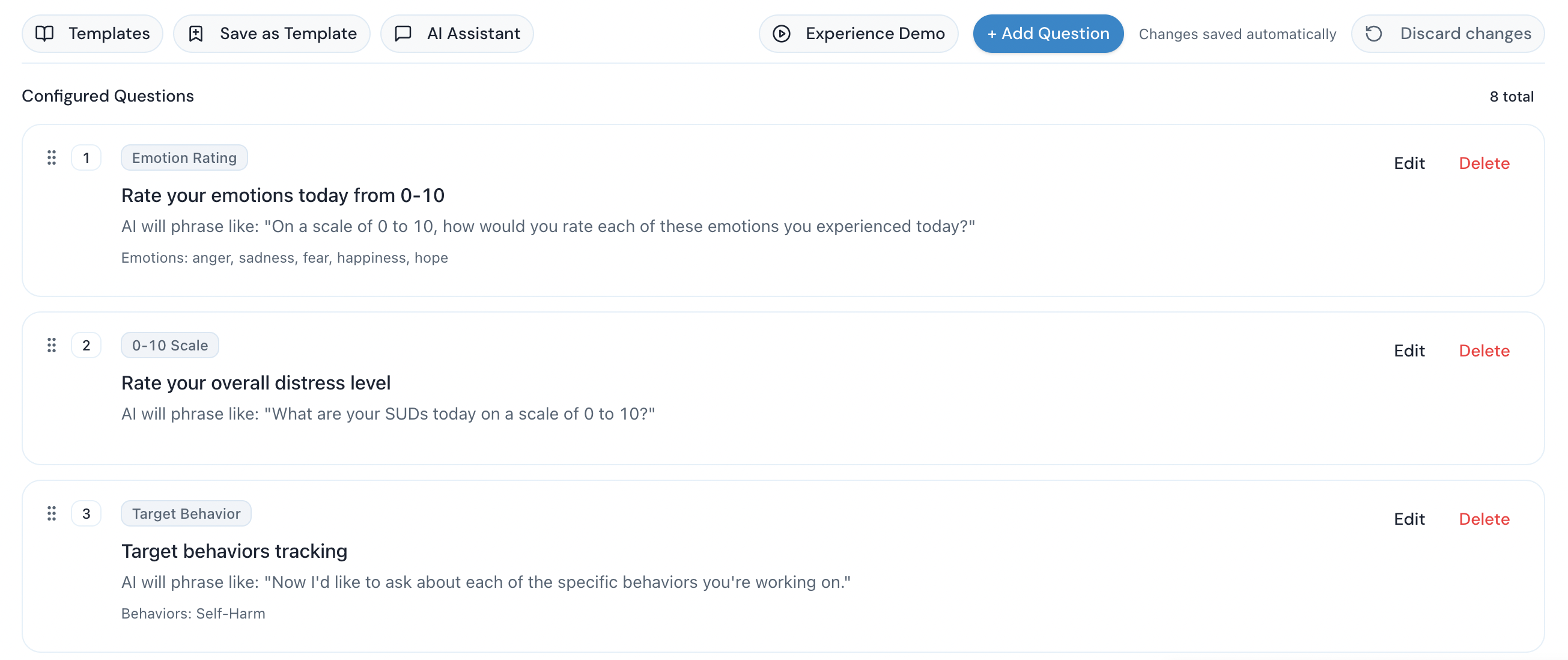
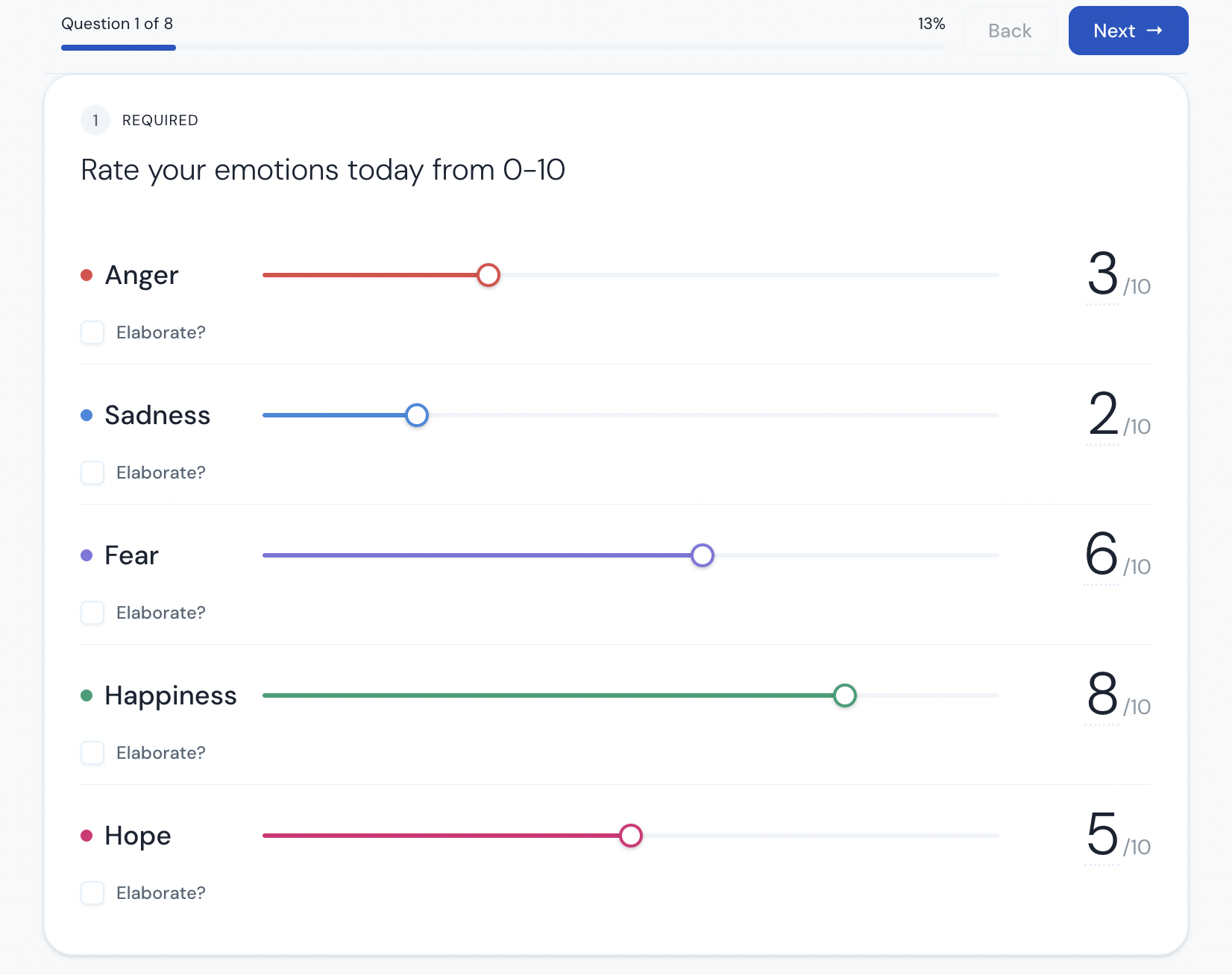
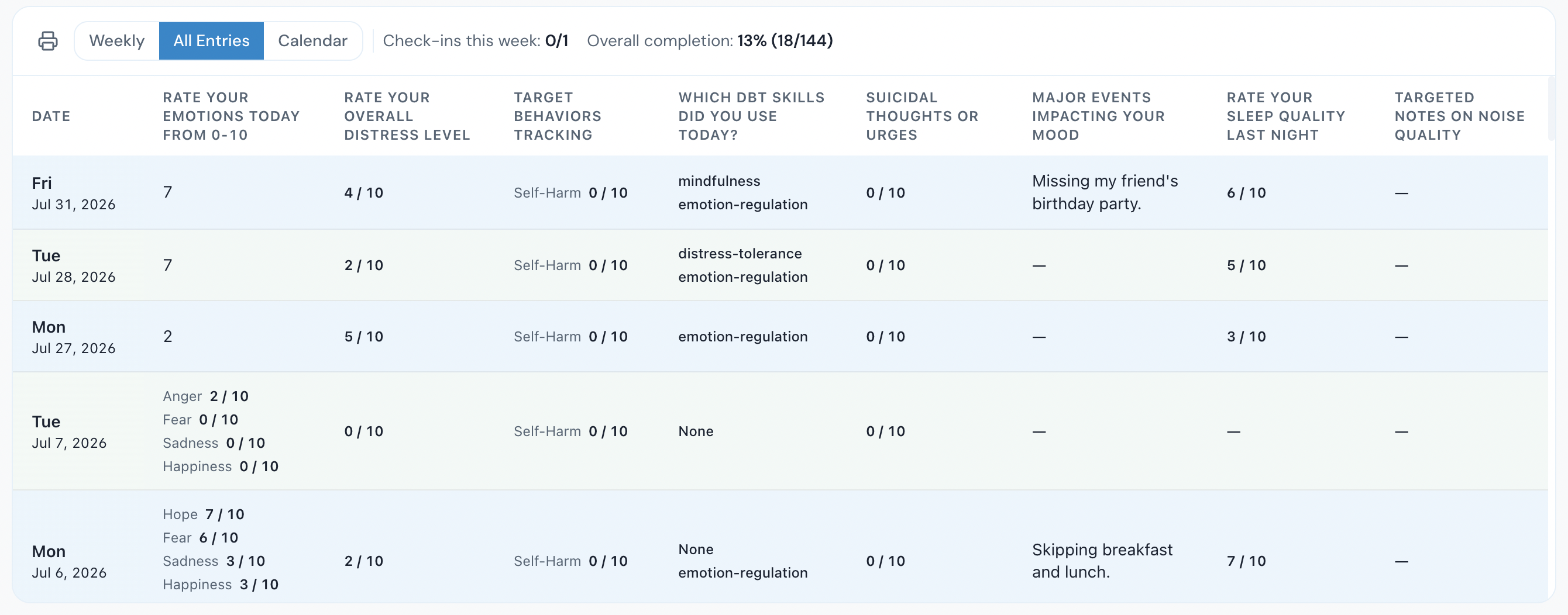
Configure exactly what is collected, including emotion ratings, target behaviors, DBT skills, and the wording the AI uses during each check-in.
Patient check-in
We don't believe in one-size-fits-all
We meet patients where they are. Every method below flows through the same saved contact. No separate logins or numbers to remember.
Text
Text the number naturally. Dbrief handles the rest and structures the response automatically.
Secure online form
A link opens their custom diary card form, pre-filled and ready to submit in under a minute.
Phone call
Call in anytime, or get called at a scheduled time. Responses appear instantly in your dashboard.
Paper diary card
Upload a completed diary card directly. No re-entry needed.
Common questions
Yes. All data is encrypted with AES-256, both in transit and at rest, and Dbrief is built to HIPAA requirements throughout.
No. The core experience runs over text and a web form. Phone calls are also available for patients who'd rather not text at all.
Yes. Every diary card is configured question by question: emotion ratings, target behaviors, skills used, and anything else specific to that patient's plan of care.
No. Dbrief surfaces structured, longitudinal data so you walk into session already informed. The clinical read is always yours.